What is Myopia?
Myopia, also known as nearsightedness, is becoming increasingly common in children and can continue to worsen as they grow. At Burlington Eyecare, we offer advanced myopia management solutions designed to help slow progression, protect long-term eye health, and support clearer, more comfortable vision for your child’s future.
What are the risks of Myopia?
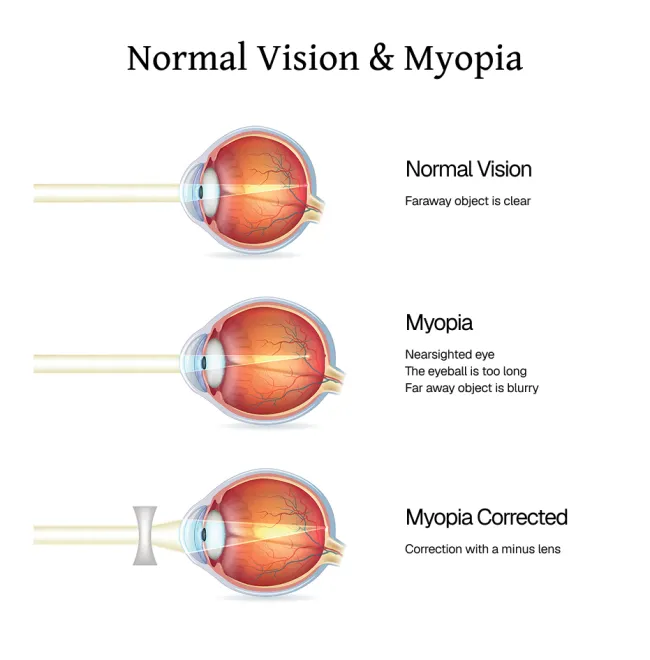
Myopia (nearsightedness) is more than simply needing stronger glasses over time. As myopia progresses, the eye becomes longer, which can place additional stress on the eye and increase the risk of serious vision complications later in life.
Higher levels of myopia are associated with an increased risk of developing several eye diseases and conditions, including:
- 3x increased risk of cataracts
- 2x increased risk of glaucoma
- 3x increased risk of retinal detachments
- 100x increased risk of myopic macular degeneration
Because myopia often progresses during childhood, early intervention and ongoing monitoring are important.
Treatment for Myopia
Myopia, or nearsightedness, cannot be reversed, but there are now several well-studied treatment options that can help slow its progression by over 60%. Traditional glasses and contact lenses help correct vision but do not manage the progression of myopia itself.
Treatment options include:
- Miyosmart Eyeglasses – Specialty spectacle lenses that look and function like regular glasses while using advanced D.I.M.S. technology to help slow myopia progression. This is an excellent non-invasive option for children who wear glasses full-time.
- MiSight and Abiliti Soft Contact Lenses – Specially designed daytime contact lenses that use advanced optical technology to help reduce myopia progression while providing clear, comfortable vision.
- Low-Dose Atropine Eye Drops – Prescription eye drops used nightly before bed to help control the eye’s focusing response and slow the progression of nearsightedness with minimal side effects.
- Orthokeratology (Corneal Reshaping Therapy) – Specialized overnight contact lenses that gently reshape the cornea while sleeping, allowing for clear daytime vision without glasses or daytime contact lenses.
Because myopia is influenced by both genetics and environmental factors, healthy visual habits are also important. Children should limit extended screen time, take breaks from near work every 20 minutes, and spend at least two hours outdoors each day while wearing proper UV protection. Regular eye exams are essential for monitoring changes in vision, especially for children with one or both parents who are nearsighted.
We recommend starting myopia management as soon as nearsightedness is detected, particularly if progression is noticed during annual or six-month eye exams. Early intervention gives the best opportunity to slow progression and reduce the long-term risk of eye disease associated with high myopia.